
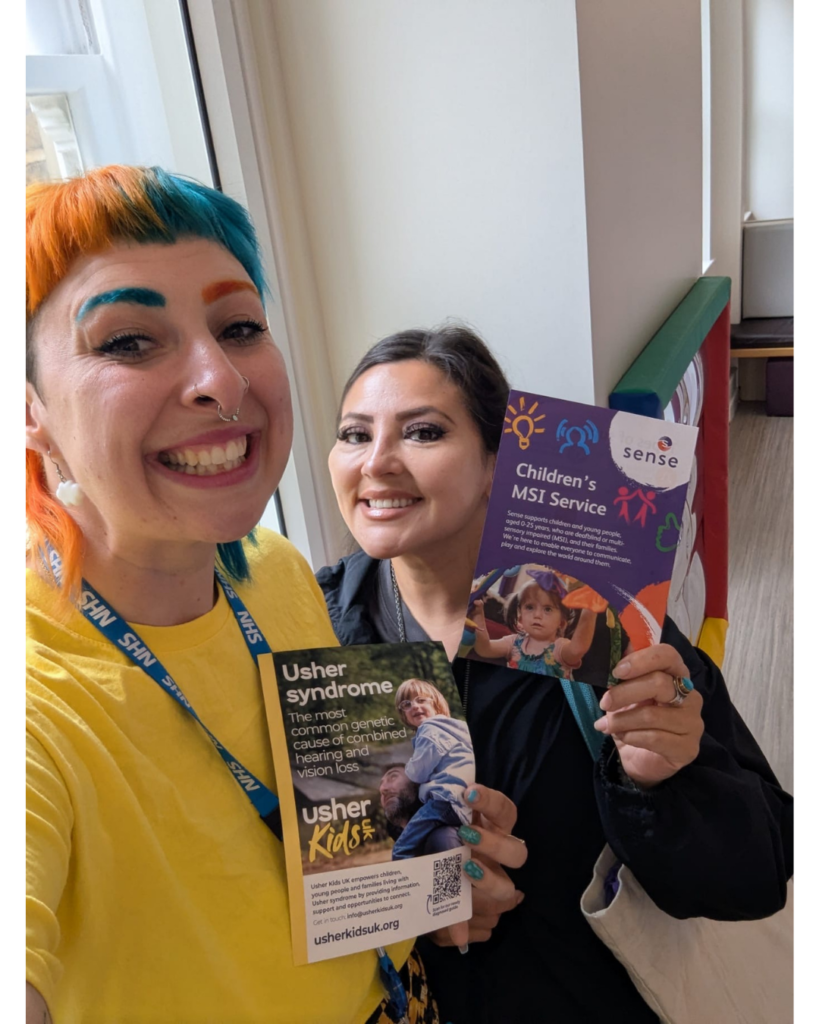
There are many organisations across the UK that can support children and young people with Usher syndrome, as well as their families, parents and carers. These organisations offer a wide range of expertise, guidance and community connections.
We have grouped them into key areas to help you find the right type of support.
Specialist organisations (sensory impairment, deafblindness)
These organisations have expertise in supporting people with combined hearing and vision differences, or separate sensory impairments. They understand the unique experiences of Deafblind children and young people and can offer tailored information, guidance and opportunities to connect with others.
They may also provide resources, training, or community activities designed specifically for people with sensory differences and their families.
Usher syndrome–specific support
Organisations focused specifically on Usher syndrome, offering tailored information, shared experiences and community connections.
Usher Syndrome Ireland (Ireland) (opens in a new tab)
Supports individuals and families affected by Usher syndrome in Ireland. They provide information, community links and peer support for those navigating dual sensory loss.
Usher Syndrome Coalition (USA) (opens in a new tab)
A global organisation supporting people and families affected by Usher syndrome. They offer information, community connections and opportunities to stay informed about developments.
Cure Usher Syndrome (UK) (opens in a new tab)
Focuses on raising awareness and supporting progress around finding a cure for Usher syndrome.
Usher Syndrome Society (USA) (opens in a new tab)
Focuses on raising awareness of Usher syndrome by sharing personal stories and increasing understanding of the condition, while supporting wider efforts to improve recognition and funding.
Molly Watt Trust (UK) (opens in a new tab)
Raises awareness of Usher syndrome and supports families through shared experiences, information and community connection. They also highlight and share access to technology and tools that can support people with Usher syndrome in their day-to-day lives.
Deafblind and dual sensory support
Organisations with expertise in supporting people with combined hearing and vision differences, including practical guidance and wider community support.
Sense (opens in a new tab)
Supports children and young people who are deafblind or have complex sensory needs, and their families. They offer guidance, opportunities to connect, and support to help young people develop communication and independence.
Deafblind UK (opens in a new tab)
Provides support and advice to people with combined sight and hearing loss, including families of children and young people. They help parents and carers feel informed and connected, and can signpost to specialist support such as the Usher Syndrome helpline. There are also similar services available in Scotland through Deafblind Scotland.
Hearing and D/deaf support
Organisations supporting children and young people who are deaf or have hearing loss. They offer guidance around communication, language and access, helping families support their child’s development and independence.
National Deaf Children’s Society (NDCS) (opens in a new tab)
Supports families with Deaf children and young people, including those with additional needs. They provide information and guidance to help parents navigate services and support their child’s development.
Royal National Institute for Deaf People (RNID) (opens in a new tab)
Supports people who are Deaf or have hearing loss, including families. They provide information, guidance and support to help children and young people access the world around them.
Cochlear Implant Community Support (CICS) (opens in a new tab)
Supports children and young people with cochlear implants and their families. They offer peer support and shared experiences and have events throughout the year for families.
British Deaf Association (BDA) (opens in a new tab)
A national organisation that represents Deaf people and promotes access and inclusion. Their work can support families in understanding communication and Deaf culture.
Vision-focused support
Organisations specialising in sight loss, offering guidance, opportunities and support for children and young people as their vision changes.
Guide Dogs (opens in a new tab)
Supports families of children with vision impairment, including those with additional needs such as Deafness or hearing loss. They offer guidance, habitation support and opportunities that help children and young people build independence and life skills.
Royal National Institute of Blind People (RNIB) (opens in a new tab)
Supports children and young people with sight loss and their families. They offer information, advice, resources and connections.
Retina UK (opens in a new tab)
Supports people affected by inherited sight loss, including the condition linked to vision changes in Usher syndrome. They provide information, peer support, resources and webinars, as well as opportunities to connect with others.
Look UK (opens in a new tab)
Supports children and young people with vision impairment and their families. They offer peer support, resources, confidence-building opportunities and connections with others.
Royal Society for Blind Children (RSBC) (opens in a new tab)
Supports blind and partially sighted children, young people and their families. They provide opportunities to build confidence, independence and social connections.
Thomas Pocklington Trust (opens in a new tab)
Supports people with sight loss through information, research and programmes that help improve education, employment, independence, confidence and inclusion in everyday life.
VICTA (opens in a new tab)
Supports children and young people with vision impairment through activities, experiences and opportunities to build independence and social connections.
Research, information and wider support
Organisations involved in research, awareness and sharing information about conditions linked to Usher syndrome.
Fight for Sight UK (opens in a new tab)
Funds research and shares information about sight loss conditions, including the condition linked to Usher syndrome. They help families stay informed about wider developments.
Save Sight Now Europe (opens in a new tab)
Focusing on advancing research and treatment for Usher syndrome type 1B, particularly focusing on the retinitis pigmentosa.
For more information on research updates, please see our research page
You may also be able to access support through local sensory support services, which are provided by local authorities and work with families, schools and professionals to support children and young people with sensory or multi-sensory needs. They can also provide information about local services and opportunities available through your area’s local offer.
Emotional & mental health support
Living with Usher Syndrome can sometimes feel overwhelming, both for young people and for families. Organisations in this area focus on emotional wellbeing and mental health, offering safe spaces to talk, share experiences and build resilience.
They may provide guidance, peer support, or access to trained professionals who understand the challenges that can come with sensory differences and long-term conditions.
Sensory and Usher-relevant organisations
Fight Against Blindness (FAB) (opens in a new tab)
Provide specialist psychological support to help children and young people with sight loss and visual impairment manage their mental health and eye conditions in everyday life. They are linked with specific hospitals in the UK where the clinician can refer you to FAB for support.
For: children and young people
Deafblind UK (opens in a new tab)
Supports people with combined sight and hearing loss, including families. They offer specialist services and support for those living with dual sensory loss, including Usher syndrome.
For: children, young people, parents and carers
Royal National Institute of Blind People (RNIB) (opens in a new tab)
Supports people with sight loss and their families. They provide a range of support options, including access to counselling and guidance to help individuals and families navigate changes linked to vision loss.
For: children, young people, parents and carers
National Deaf Children’s Society (NDCS) (opens in a new tab)
Supports families with deaf children and young people. They provide information and guidance to help families support their child’s development and everyday experiences.
For: children, young people, parents and carers
National Deaf Child and Adolescent Mental Health Services (Deaf CAMHS)
Specialist mental health services for deaf children and young people, offering tailored support that takes into account communication needs and lived experiences. You can be referred to them by any professional, such as a school teacher, a social worker or your GP.
For: children and young people, parents and carers
Eye Clinic Liaison Officer (ECLO)
Based in many eye clinics, ECLOs provide practical and emotional support following a diagnosis or changes in vision. They can help families access information, understand next steps and connect with local support.
For: children, young people, parents and carers
Rareminds Wellbeing Hub
Supports people living with rare, genetic and undiagnosed conditions, along with their families. The online wellbeing hub offers mental health information, resources and access to support designed to help individuals and families navigate the emotional impact of living with a rare condition.
For: young adults, parents and carers
Teachers of the Deaf, Teachers of the Visually Impaired, Teachers of Multi Sensory Impairment, and Sensory Support Teams
Many children are supported by these professionals or local sensory support teams. They often know children well over time and can help recognise emotional changes, offer reassurance, and support access to further services when needed.
For: children, young people, parents and carers
Sense (opens in a new tab)
Supports children and young people who are deafblind, along with their families. They provide specialist support around communication, connection and navigating everyday life.
For: children, young people, parents and carers
Wider mental health and wellbeing support
National Health Service (NHS)
Mental health support is available for free through the NHS. Depending on where you live, you may need to ask your GP for a referral to talking therapies, or you may be able to refer yourself. There are also services and support available specifically for parents and carers.
For: children, young people, parents and carers
Mind (opens in a new tab)
A mental health charity that provides information, guidance and support to help people understand and manage their mental health.
For: young people, adults, parents and carers
YoungMinds (opens in a new tab)
A national charity focused on children and young people’s mental health, helping families understand and support emotional wellbeing.
For: children, young people, parents and carers
Samaritans (opens in a new tab)
Offers emotional support for anyone who may be struggling, providing a safe and non-judgemental space to talk.
For: young people, adults, parents and carers
Childline (opens in a new tab)
A confidential service for children and young people, offering a safe space to talk about worries and experiences.
For: children and young people
Education & legal advice
These organisations help families understand their rights and navigate education and support systems. This includes guidance around schools, additional needs, and accessing the right support for children and young people.
They can also help parents and carers feel more confident when making decisions, attending meetings, or advocating for their child’s needs.
Education, rights and practical support
Independent Provider of Special Education Advice (IPSEA) (opens in a new tab)
Supports families to understand their rights within the education system. They offer free legal templates, guidance and webinars, as well as bookable appointments with trained advisers to help parents feel more confident when navigating additional needs and making decisions about support.
Special Educational Needs and Disability Information, Advice and Support Services (SENDIASS)
A free, impartial service available across England. Every local authority is required to provide a SENDIASS service, which may be run at a local or county level depending on the area. While SENDIASS sits within the local authority, it operates independently from decision-making processes, offering impartial information and guidance. They help families understand their rights and processes, and support them in making informed decisions.
SOS!SEN (opens in a new tab)
A charity offering advice and support for families navigating special educational needs. Their help centre covers a wide range of SEND topics, alongside 1:1 support, a document service and webinars. They help parents feel more confident when advocating for their child.
Contact (opens in a new tab)
Supports families with disabled children by providing guidance on education, additional needs and navigating support systems. They help parents feel more informed and confident when making decisions and accessing the right support.
Coram Children’s Legal Centre (opens in a new tab)
Provides information and legal guidance relating to children’s rights and education. They support families in understanding legal processes and options.
Transition to employment and adult rights
As young people get older, support may also include understanding rights in employment and accessing support in the workplace.
Advisory, Conciliation and Arbitration Service (ACAS) (opens in a new tab)
Offers information and guidance around workplace rights, including reasonable adjustments and how to resolve issues at work.
Equality Advisory and Support Service (EASS) (opens in a new tab)
Provides advice and support on equality and discrimination issues, helping individuals understand their rights and what to do if things are not working as they should.
General advice and local support
Citizens Advice (opens in a new tab)
Provides free, independent advice on a wide range of issues. This can include support with education, benefits, housing, legal matters and everyday challenges. They can also help families understand what local support is available in their area and how to access it.
Financial & practical support
Raising and supporting a child with additional needs can bring extra pressures. Organisations in this category offer help with practical day-to-day matters and financial guidance.
This may include information about funding, benefits, equipment, or other forms of support that can help make life more manageable for families.
Financial support and guidance
Turn2us (opens in a new tab)
Provides information and tools to help families understand and access financial support. This includes a benefits calculator, guidance on grants, and practical support for people who may be struggling financially.
Citizens Advice (opens in a new tab)
Provides free, independent advice on a wide range of issues. This can include financial support, benefits, housing and everyday challenges, as well as helping families understand local support available in their area.
Contact (opens in a new tab)
Supports families with disabled children by providing guidance on finances, family life and navigating additional costs. They help parents feel more informed and confident when accessing support.
Grants, funding and practical support
The Powell Family Foundation (opens in a new tab)
Helps children and young people with a vision impairment through the provision of grants to individuals in need of financial assistance.
Family Fund (opens in a new tab)
Provides support to families raising disabled children, including access to grants and funding. They also help families manage the additional pressures of day-to-day life through practical support.
Turn2us (grants search) (opens in a new tab)
Offers tools to help families find grants and funding that may be available to them, supporting a wide range of needs and circumstances.
Royal National Institute of Blind People (RNIB) (opens in a new tab)
Offers guidance and resources that may include access to financial support, practical help and information for families where sight loss is part of their child’s needs.
Stay in touch
We send out emails to keep people on our mailing list up to date with events, new resources and other services which we think are relevant to our community.