
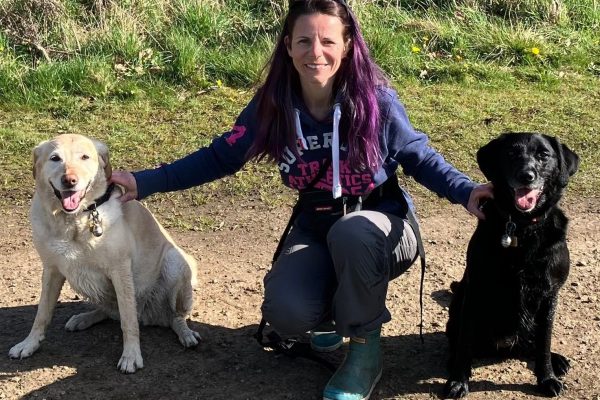
Laura
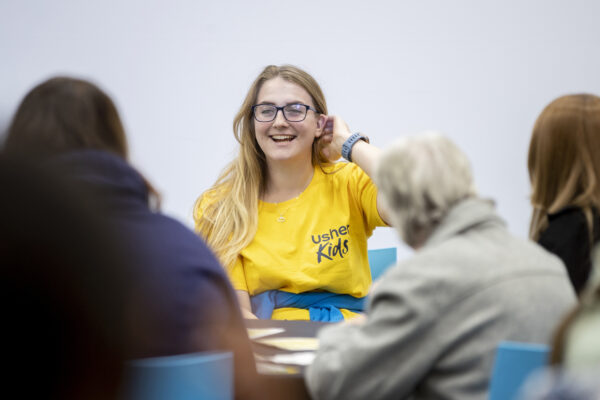
My name is Laura Whitaker and I am 40 years of age. I have Usher syndrome, was born partially deaf and started to lose my sight from a young age. Just remember - support is always out there. Never be afraid to ask for help.
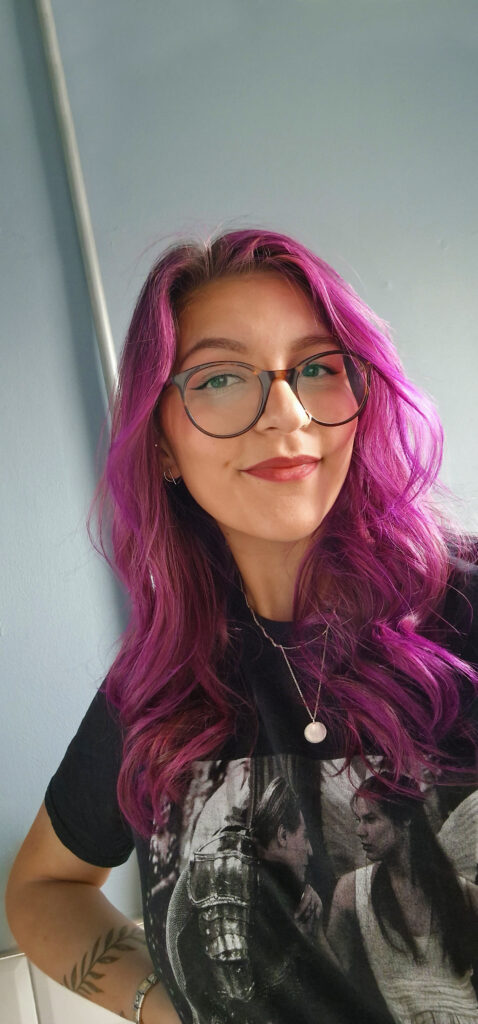
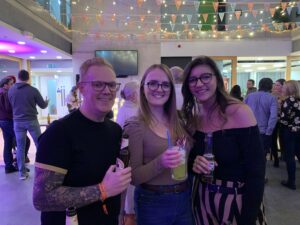
Since there’s a very good chance you have no idea who I am, let me introduce myself – My name’s Asia. I’m a 25-year-old graphic designer from the lovely county of South Yorkshire. I have two older brothers, 11 tattoos, and a cat called Harvey. I also happen to have a condition called Usher syndrome (but you probably figured that part out already).
When I was born in the summer of 1998, newborn hearing checks weren’t a thing. It wasn’t until my 7-month check that doctors noticed something was awry with my hearing. I failed my follow-up auditory brainstem response test, leading to the diagnosis of severe bilateral sensorineural hearing loss. I was given two hearing aids at 11 months old and pretty much sent on my merry way to get on with my life as the only deaf person in my family.
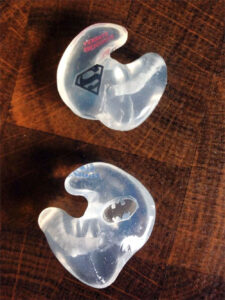
From then on, things were relatively straightforward with my health – routine hospital appointments, hearing tests, new ear moulds, rinse and repeat. I attended a mainstream primary and secondary school and found coping strategies and adaptations that worked for me. In school, I would carry a small card with my needs on (please face me when you’re talking to me, sit me close to the front, and for crying out loud don’t shout while you’re wearing my radio aid). I had a tight-knit group of friends who knew what I needed and how to help and support me. My family were extremely supportive and encouraging of me throughout my entire childhood and adolescence – never once was I made to feel that I was less of a person than anyone else because of my hearing loss, or that I was any less capable of achieving whatever I wanted to achieve. I used to love the fact that I could customise my ear moulds with different stickers, or have different coloured hearing aids. Don’t get me wrong, it was by no means easy, but it was a level of stability that I’d adapted to and accepted as a part of my life, a huge factor of the very foundation of who “Asia” was.
Then one weekend, when I was 19, I thought I’d got some dust in my eyes as I started to notice a bit of shadowing – almost like a cobweb – in the centre of my vision in my right eye. After leaving it for a few days, I was sent to A&E by my doctor to get it checked out. I was eventually dismissed by an A&E doctor and told that I had posterior vitreous detachment (PVD), which apparently was nothing to worry about and I should only be concerned if the floaters seemed to get worse suddenly.
Which, of course, they did.
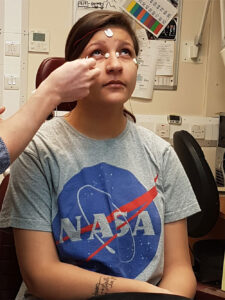
I won’t lie – the testing process was grim. I’d never had to have eye drops before, but suddenly I was having ten sets of various eye drops within the space of a week and a half. I’m claustrophobic, but I had to put my head in a little box and stare at a bunch of flashing lights whilst having electrodes literally touching my eyeballs so the doctor could measure my brain activity (an electroretinogram and visual field test). I felt like some kind of lab rat being poked and prodded and honestly, it sucked.
After countless trips back and forth to various hospitals to see various ophthalmologists, I was eventually diagnosed with Usher syndrome Type 2. I remember being sat in the consultation room with my mum and my oldest brother and my heart just broke. I was told I’d never be able to drive because the minimum peripheral vision requirement was 120°. I had 10° of peripheral vision left, and I hadn’t even realised I was losing it.
I was 19 years old and forced to grow up so much faster than everybody else around me. For my whole life, I’d chased a career in graphic design and now I was being handed a visual impairment certificate It felt like my dream career was over before it had even started. I thought I’d learned how to deal with my deafness but this? This was completely unfamiliar territory for me. It left me questioning everything I thought I had figured out, my deafness included. I was starting to notice that I was now an adult, sitting in hearing clinics where I was the youngest person by a country mile, being seen by audiologists who didn’t seem to know how to deal with me with the same compassion I’d experienced in the children’s clinics.
However, as difficult and life-changing as the diagnosis was, it also came with a strange sense of relief and clarity; I wasn’t just clumsy, I literally couldn’t see the things I was bumping into because they were outside my field of vision. I wasn’t just a bit of a wuss for being scared of the dark; believe me when I say that being unable to see or hear in the dark can be pretty scary. So many things suddenly made sense.
At some point after my diagnosis, I completely changed my mindset. I truly wish I could remember the exact moment but all I recall is a newfound appreciation for my life, the experiences I was having and, above all, the people around me. My family and friends were so incredibly loving and supportive. I don’t think I’d be the person I am today if I didn’t have the amazing support network that I have around me.
The support and help I have from those who love me mean that I still love going to gigs, on days or nights out, or to the cinema. I go on holidays to places I’ve never been because I know that not only do I have someone there to support me along the way, but I’m confident enough in myself to ask for help if something isn’t accessible enough for me.
That support network only grew as I delved more into the world of social media. I’d never really been part of a deaf community growing up, so when I tweeted about a deaf ASOS model that I’d noticed, I definitely didn’t expect the overwhelming reaction it received. People were messaging me to thank me for bringing it to their attention and for increasing public awareness. People were coming to me with self-esteem and confidence issues around their disabilities and asking for advice.
Now, I definitely wouldn’t call myself an expert by any stretch of the imagination but just knowing that I potentially helped even one or two people within their own lives as disabled individuals? It’s truly humbling. There are so many amazing little communities on Facebook, Instagram, Twitter – whatever your social platform of choice is. You might have the most supportive family and friends in the world but sometimes you need people who know how it feels to be in your position. While we’re all different, even if we have an identical diagnosis, there are countless people who just… get it.
I’m now an auntie to six nieces and nephews, the youngest of whom also wears hearing aids. I want him to grow up feeling supported and completely unstoppable, regardless of his hearing.
My advice to other people with Usher syndrome, as a self-confessed non-expert?
And lastly, a few notes for parents and guardians, friends and family, or anyone who knows someone with Usher syndrome and just wants to do their bit.
So, who am I today?
My name is Asia, and I’m 25 years old. I’m still a Graphic Designer. I have a very dry sense of humour and laugh at things that I probably shouldn’t (including my disabilities!). I cry at films, a lot. I listen to heavy rock and metal music and love going to gigs. I’m a huge nerd, I love reading, and I go to as many Comic Cons as my bank balance will allow! I’m a resilient, occasionally funny, incredibly sarcastic young woman. I also happen to have Usher syndrome Type 2, and you’d best believe I’m proud.
My name is Laura Whitaker and I am 40 years of age. I have Usher syndrome, was born partially deaf and started to lose my sight from a young age. Just remember - support is always out there. Never be afraid to ask for help.
When I was 14 years old, I had a routine eye check-up with an ophthalmologist who wasn’t my regular one. During the examination, she noticed some unusual spots behind my eyes and showed some concern.
I have Usher syndrome type III. I started losing my hearing first at around 14 and my sight at 17. By the time I was 21 my hearing was a moderate to serve loss and I had around 10% useful vision.
We send out emails to keep people on our mailing list up to date with events, new resources and other services which we think are relevant to our community.